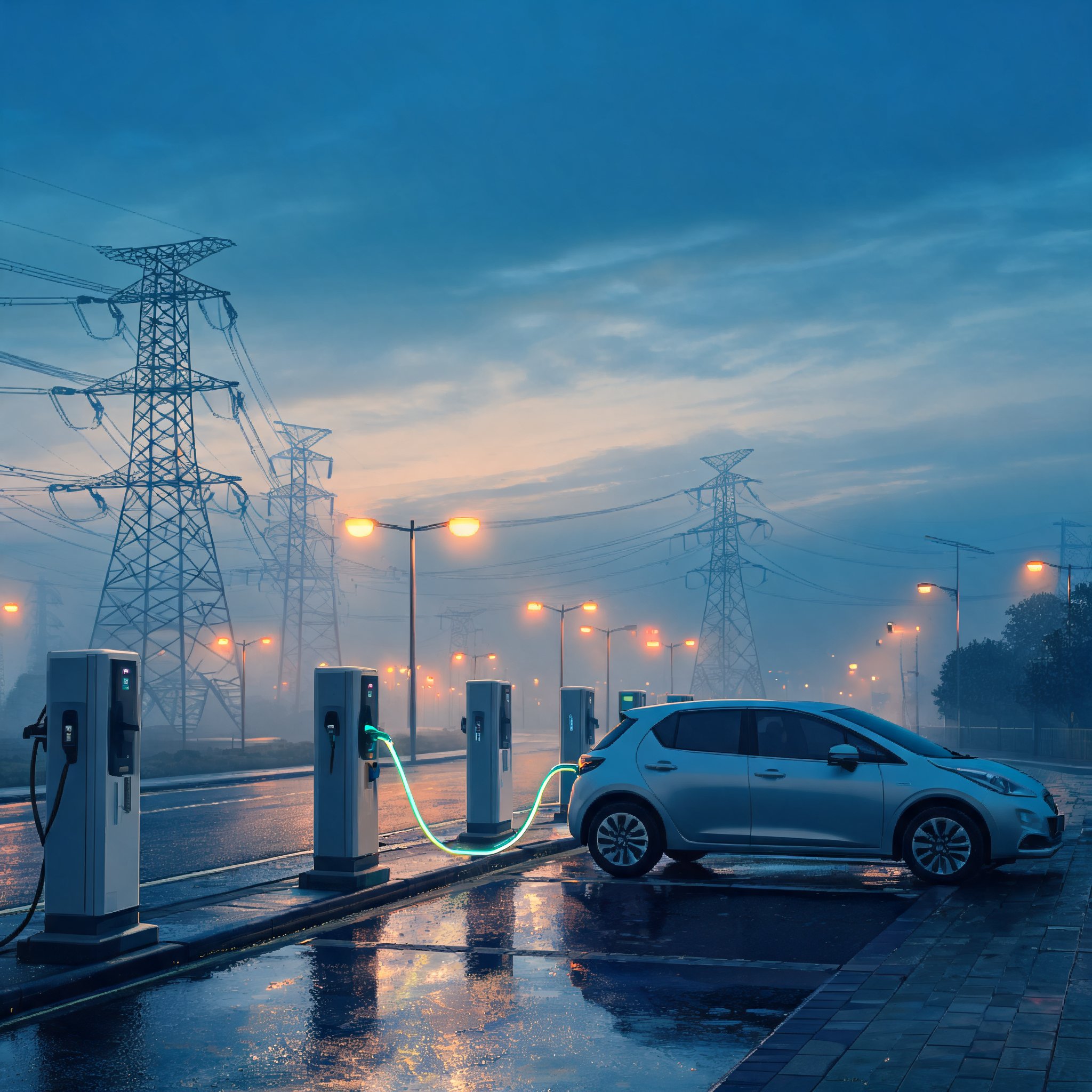
Charging companies have pushed back against suggestions that Britain is not ready for electric cars, after reports that ministers are considering cutting the proportion of new cars that must be electric by 2030 from 80% to 60%.
The government is said to be weighing a weaker Zero Emission Vehicle (ZEV) mandate following pressure from manufacturers concerned about costs, jobs and consumer demand. Ministers have taken no final decision, and the government says it remains committed to ending sales of new cars powered solely by petrol or diesel in 2030, with all new car and van sales required to be zero-emission by 2035. A decision is expected after further ministerial discussions this week.
Rapid charging costs under the spotlight
The industry warning came a day after the publication of Reverse the Charge, an impact assessment by EV newsletter The Fast Charge in partnership with Zest, which found that the fixed grid charges paid to keep a single rapid charger live have risen by 616% since 2021, from £61.47 a week to £440.13. The report warns that rapid charging could pass £1 per kWh next year, hitting drivers without off-street parking hardest, and calls on Ofgem to urgently fix the capacity-based billing behind the rise.
Certainty framed as an investment signal
Robin Heap, chief executive of Zest, argued that the charging infrastructure is already being delivered and should not be blamed for the challenges facing carmakers. He said investment follows confidence and confidence depends on certainty, and that speculation about weakening the ZEV mandate sends the wrong signal to businesses committing millions to Britain's electric future. Heap added that the transition needs long-term thinking rather than short-term concessions, and that Ofgem's fixed grid charges are already causing charging projects to be scaled back or shelved. Further uncertainty over EV targets risks delaying investment, slowing progress and leaving drivers worse off, he said, while the combined pressures make the UK less attractive for investment than other markets.
Vans identified as the pressure point
Ginny Buckley, chief executive of electric car buying and advice site Electrifying.com, said drivers and businesses need a clear road ahead and that, with growing uptake and more affordable models on offer, now is the time to build confidence rather than weaken it. She said the ZEV mandate already includes substantial flexibilities, and that analysis suggests the car market collectively is ahead of its estimated requirement once CO₂ flexibilities are included. Vans, however, do need consideration: electric cars and vans are moving at very different speeds, leaving some manufacturers relying on surplus electric car credits to avoid fines on van sales. Purchase grants and charging support already exist, she said, but ministers should assess whether they address businesses' practical barriers and set a more realistic trajectory for vans.
Almost one in three new cars sold in October was fully electric, according to public data from New AutoMotive.
Drivers without driveways in focus
Yann Marston, chief revenue officer at char.gy, said the charging network is growing ahead of government targets and is ready to support more drivers making the switch. Keeping ambitious EV targets in place would help ensure drivers have access to more affordable electric cars, particularly those without driveways, who often face the biggest barriers, he said, adding that a consistent policy framework would deliver both more choice and greater confidence.
Investors, meanwhile, have warned that repeated changes to the rules could make Britain a less attractive place to fund new charging infrastructure.